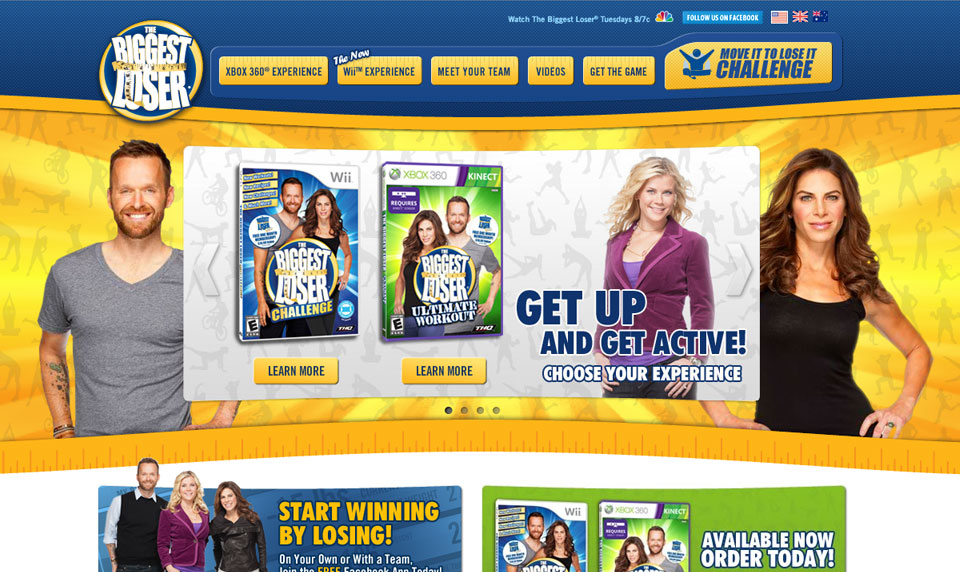
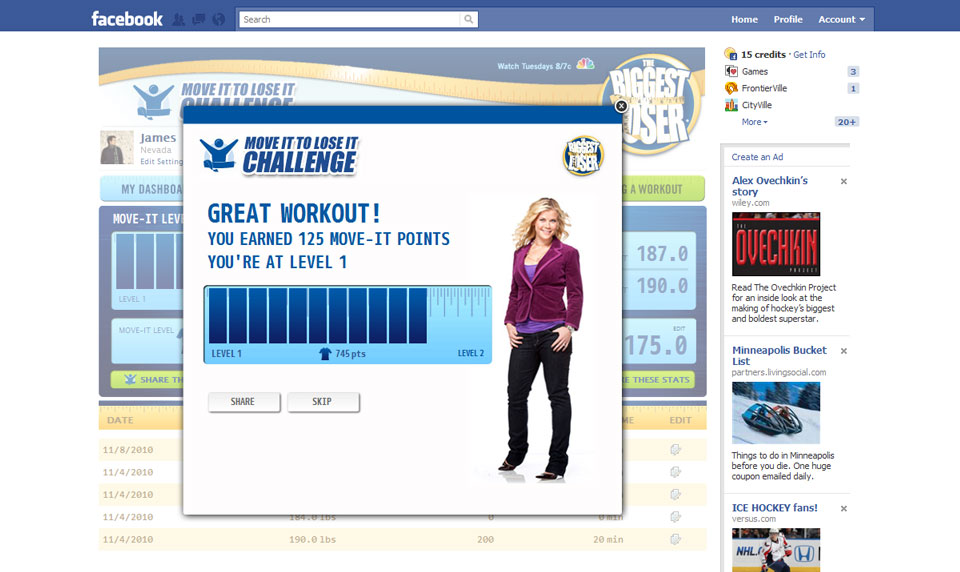
The Biggest Loser was already a proven franchise when THQ brought the brand to consoles with The Biggest Loser: Ultimate Workout. Our role was not the game itself. It was everything that surrounded it digitally. We designed and built a microsite and a Facebook canvas app that worked together as a unified platform, sharing data across both so users could engage wherever they were most comfortable.
The challenge was treating a game tie-in as something more than a promotional page. The Biggest Loser audience was not a typical gaming audience. They were fans of the show, people motivated by accountability and community, and the digital experience had to speak to that. The work needed to feel less like a game website and more like a place where the journey actually happened.
Losing Was the Goal. Winning Together Was the Point.
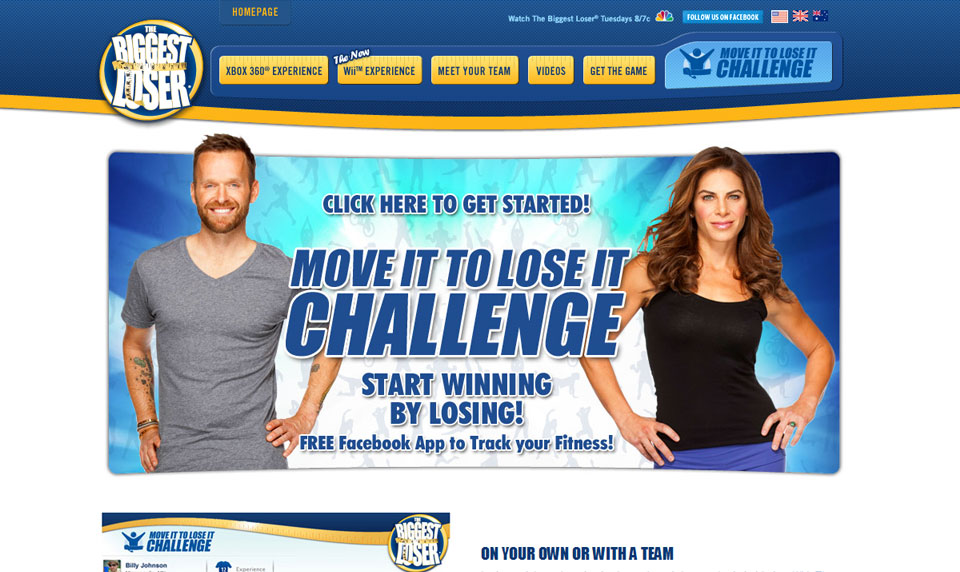
The microsite was the anchor of the experience. It introduced the game, supported the Move it to Lose it Challenge, and gave users a place to log in, track their workouts, and monitor their progress outside of Facebook. Social sharing was built in as well, with posts drafted on the microsite and pushed directly to the user's Facebook feed. The data followed the user regardless of where they logged in, so the microsite and the canvas app were always in sync.
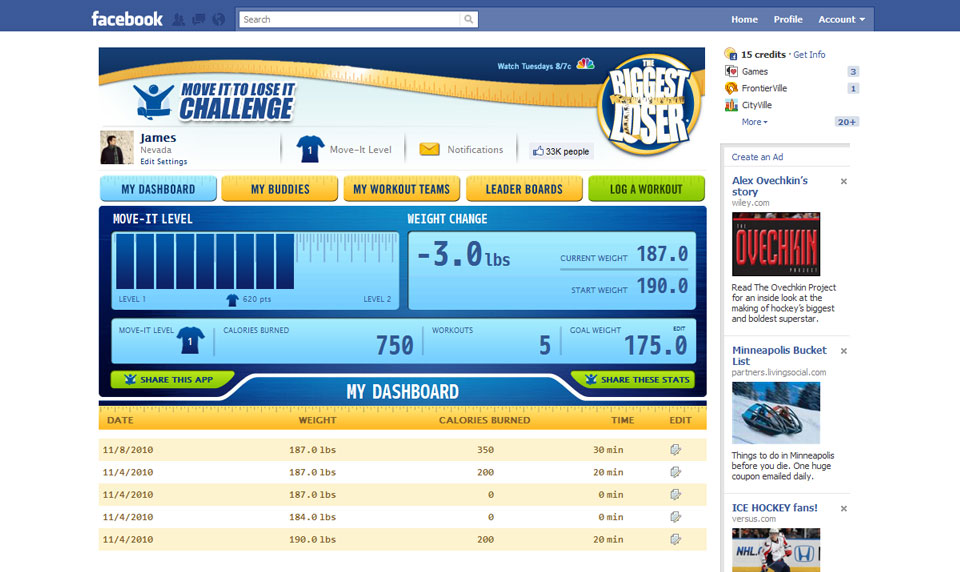
The Facebook canvas app brought the social layer to life. Users could track the same workout and weight loss data from the microsite, but here the community features took center stage. Players could form workout groups, invite friends to join the challenge, and post progress updates directly to their feed. The app turned passive fans into active participants, giving the Biggest Loser audience exactly what they responded to on the show. Accountability, competition, and the motivation that comes from doing it alongside someone else.
What started as a game promotion turned into a platform tens of thousands relied on for their weight loss journey.